Reglazing a bathtub typically costs $335–$630. Replacing one typically costs $2,000–$3,000 for a straight swap, and $4,000–$7,000 once a new tile surround is involved. For most tubs that are worn, stained, or chipped — but structurally sound — reglazing delivers the same "brand new" result for roughly a fifth of the price, in about a day instead of a couple of weeks.
That said, replacement is genuinely the better call in a few specific situations, and any contractor who tells you otherwise is selling. Here's the honest breakdown.
Side-by-side cost comparison
| Reglazing (Refinishing) | Full Replacement | |
|---|---|---|
| Typical cost | $335 – $630 national average ≈ $480 |
$2,000 – $3,000 like-for-like $4,000 – $7,000 with new tile surround |
| Time on site | A few hours — usually one day | 3 days to 2+ weeks |
| Bathroom out of use | 24 – 48 hours (curing) | Days to weeks |
| Demolition & disposal | None | Full tear-out, hauling, dump fees |
| Plumbing work | Untouched | Often required — adds $300 – $1,500 |
| Wall & tile repair | Not needed | Usually unavoidable — adds $500 – $2,000+ |
| Permits | Not typically required | May be required for plumbing changes |
| Lifespan | 10 – 15+ years with proper care | 15 – 30 years |
| Can change color | Yes | Yes |
Reglazing costs up to 75% less than replacement. Replacement buys you a longer lifespan and a brand-new fixture — but you pay for demolition, plumbing, tile work, and two weeks of a bathroom you can't use.
Why replacement costs so much more
The new tub itself is rarely the expensive part — units run anywhere from $300 to $3,000+. The cost stacks up in everything around the tub:
- Demolition and disposal — old tubs, especially cast iron, often have to be broken apart to get them out of the room.
- Plumbing — even a small change like adjusting the overflow height can add $300–$1,500.
- Tile and wall repair — pulling a tub almost always damages the surround, adding $500–$2,000 or more.
- Structural reinforcement — heavy stone or cast-iron tubs may need joist work, adding $300–$800.
- Labor — typically the single biggest line item on the invoice.
Reglazing skips every one of those. The tub never moves, the walls stay intact, and the plumbing is never opened up. That's the entire reason the price gap is so wide.
What reglazing actually does
It isn't paint. A proper refinishing job means repairing chips, cracks, and rust spots, thoroughly cleaning and etching the surface so the new coating bonds chemically, then spraying a durable factory-smooth finish and letting it cure. Done right, the result looks and feels like a new fixture — because the surface genuinely is new.
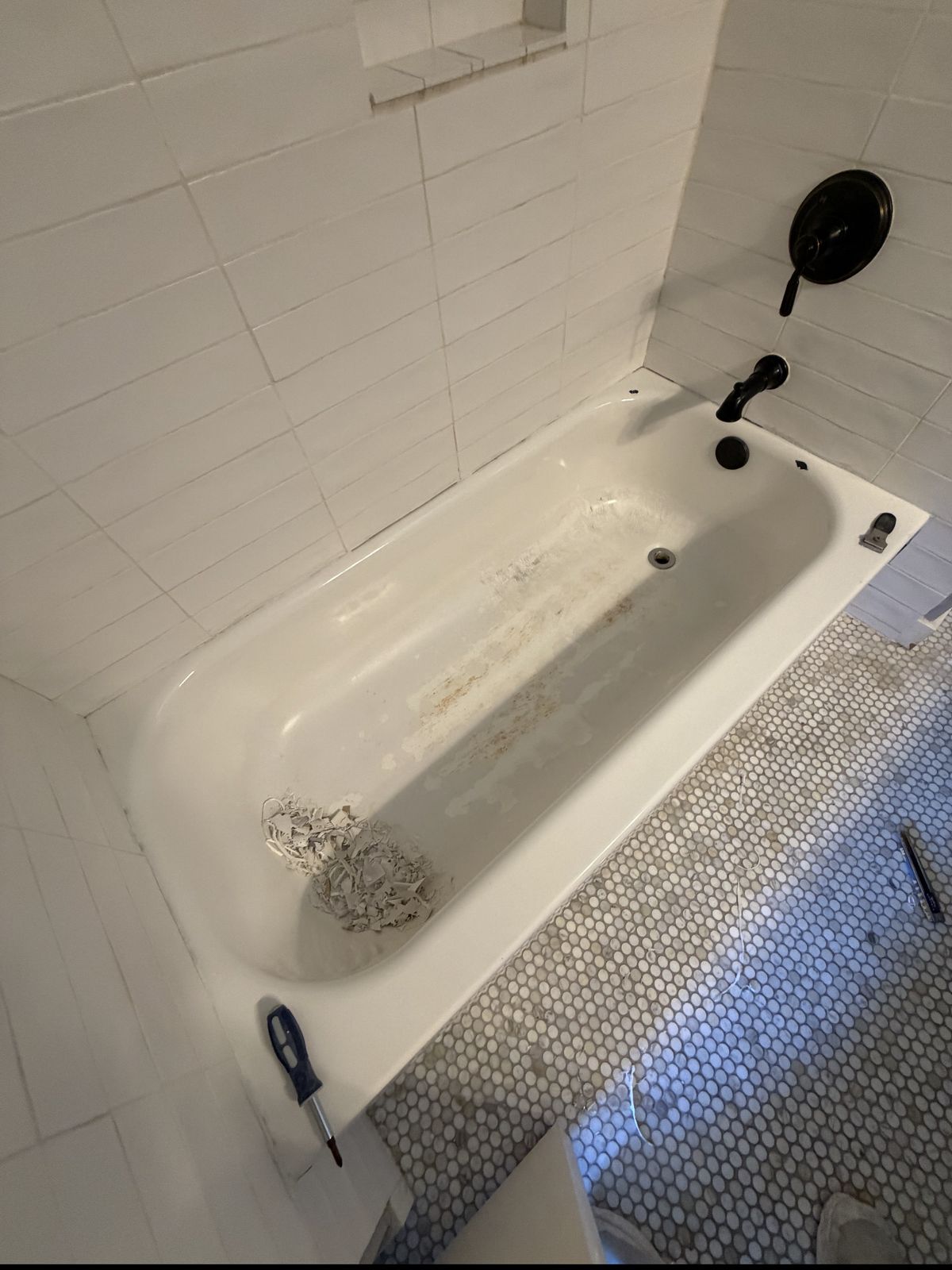 Before
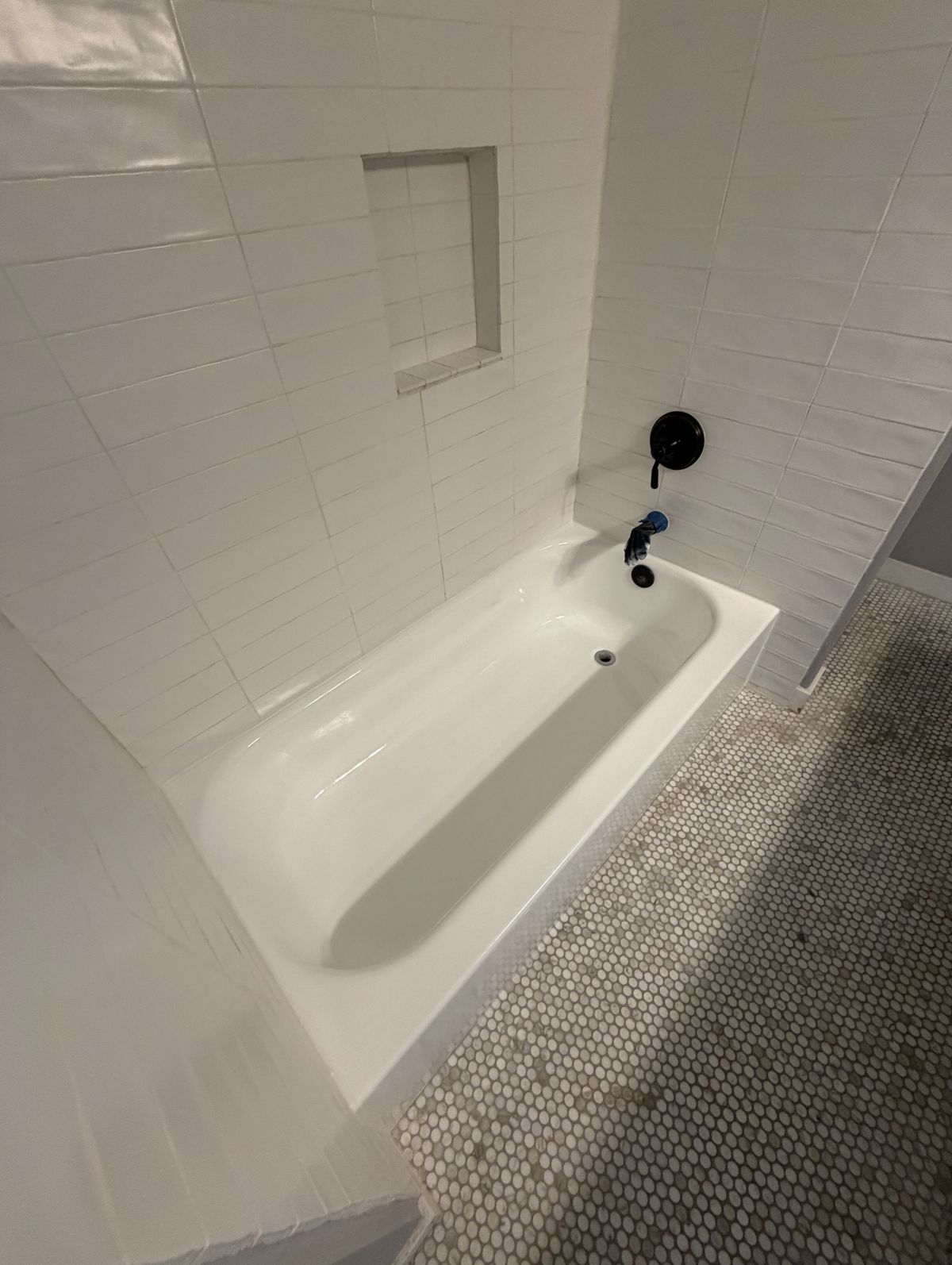 After
AfterWhen reglazing is the right choice
- The tub is worn, stained, dull, or discolored but structurally solid.
- There are chips, surface cracks, or rust spots that can be repaired and smoothed.
- You want a different color without touching the plumbing.
- The tub is vintage or cast iron — often better built than anything you'd replace it with.
- You need the bathroom back fast, or you're preparing a rental or a home for sale.
- The tile surround is fine and you don't want to disturb it.
When you should replace instead
Reglazing can't fix everything. Replace the tub if:
- The tub is cracked all the way through or leaking — a coating won't restore structural integrity.
- There's rot or water damage in the subfloor or framing underneath.
- The tub is severely rusted through from the back side.
- You're changing the layout — moving the tub, converting to a walk-in shower, or changing its size.
- The existing tub is a very low-quality thin fiberglass unit that flexes underfoot.
If you're not sure which category you're in, a photo usually settles it. That's free to find out.
How long does a reglazed finish last?
A professional refinishing job typically lasts 10 to 15 years or more with proper care. The two things that shorten that lifespan most are abrasive cleaners and suction-cup bath mats — the first wears the finish down, the second can pull at it. Stick to gentle, non-abrasive products and skip the suction mats, and the finish stays glossy for years. Danny's work is also backed by a 5-year warranty.
Is reglazing worth it in the Bay Area?
Labor costs more here than the national average, which actually widens the gap rather than narrowing it — because replacement is far more labor-intensive than refinishing. A tear-out with plumbing and tile work in San Jose, Oakland, or Santa Cruz carries Bay Area labor rates across every one of those line items. Refinishing is a few hours of skilled work with no trades to coordinate.
For landlords and property managers in particular, the math is hard to argue with: a unit turns over in a day instead of sitting empty for two weeks.
The figures above are 2026 national industry averages, gathered from the cost sources listed below — they are not a quote. Real pricing depends on the size and material of your tub, how much repair work it needs, and whether tile is included. Danny's quotes are always free and specific to your bathroom.
Have a tub you're not sure about? Send a couple of photos through the quote form and you'll get a straight answer — including if the honest answer is that you'd be better off replacing it.